What’s in a name?

What’s in a name? Identity, at least, partially.

When choosing a name for a pet, we often consider their characteristics, behaviors, or even the story of how they entered our lives. The way we name something plays a significant role in what it means to us. For instance, I once knew someone who named their cat Soup. You might wonder how they came up with such an unusual name. The story goes that when they first met the cat, it tried to eat their soup.

Names carry spiritual significance. A notable example can be found in the story of Jabez in 1 Chronicles 4:9-10: “Jabez was honored more than his brothers; and his mother named him Jabez, saying, ‘Because I bore him in pain.’ Jabez called on the God of Israel, saying, ‘Oh, that you would bless me and enlarge my territory, that your hand might be with me, and that you would keep me from harm and pain!’ And God granted what he asked.” (NRSV Bible)

While completing my undergraduate degree, I was working on a branding package for a jewelry line. I had been making jewelry for several years and previously operated an Etsy store, but I decided to close that shop to pursue new adventures. However, my passion for designing abstract yet meaningful jewelry didn’t fade, so I chose to create a new jewelry line while still in school. Then, I had to name the jewelry line and create an identity. So, the process of coming up with a name began.
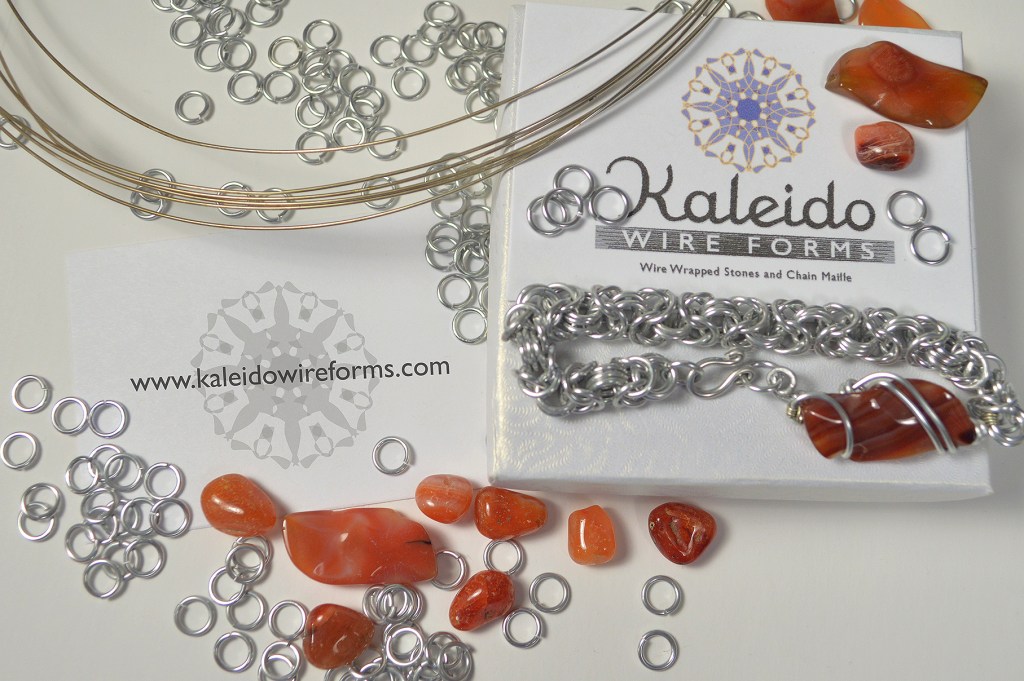
I have always been fascinated by kaleidoscopes and the way they operate. What intrigues me is how the shapes continuously evolve into something new. The word “kaleidoscope” can be broken down into two parts, each with its own meaning. The first part, “kaleido,” comes from the Greek words “kalos,” meaning “beautiful,” and “eidos,” meaning “form” or “shape.” The suffix “-scope” refers to the instrument through which these beautiful shapes are viewed.

The Kaleido line features continuously evolving shapes that carry symbolic meaning, showcase creative design, and are unique. I started with wired forms and quickly moved on to simply wire and stone. Most of my work has been with wire using cold connections; however, this has evolved into pieces being soldered. Many pieces are rustic with a boho appeal.
What’s in a name? A lot goes into a name, yet I would have to agree with Juliet that a name is a label and a rose by any other name would smell as sweet. The person, animal, thing, or brand that is named has an essence of something more than the name. Kaleido is imbued with spiritual and creative expression, and there is quite a bit of love that goes into it, too.
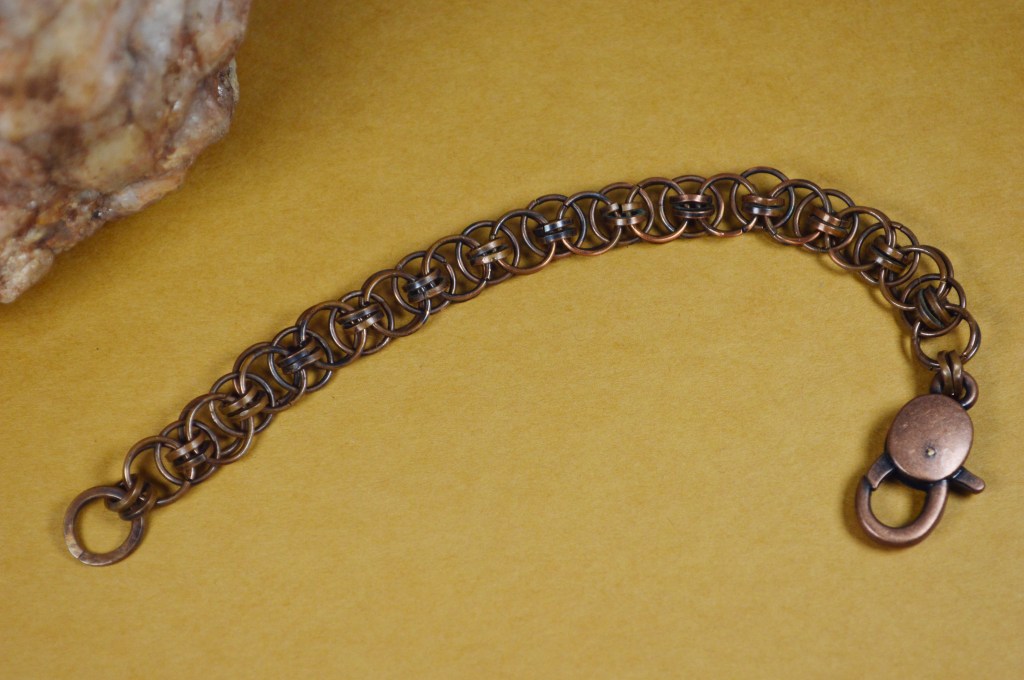
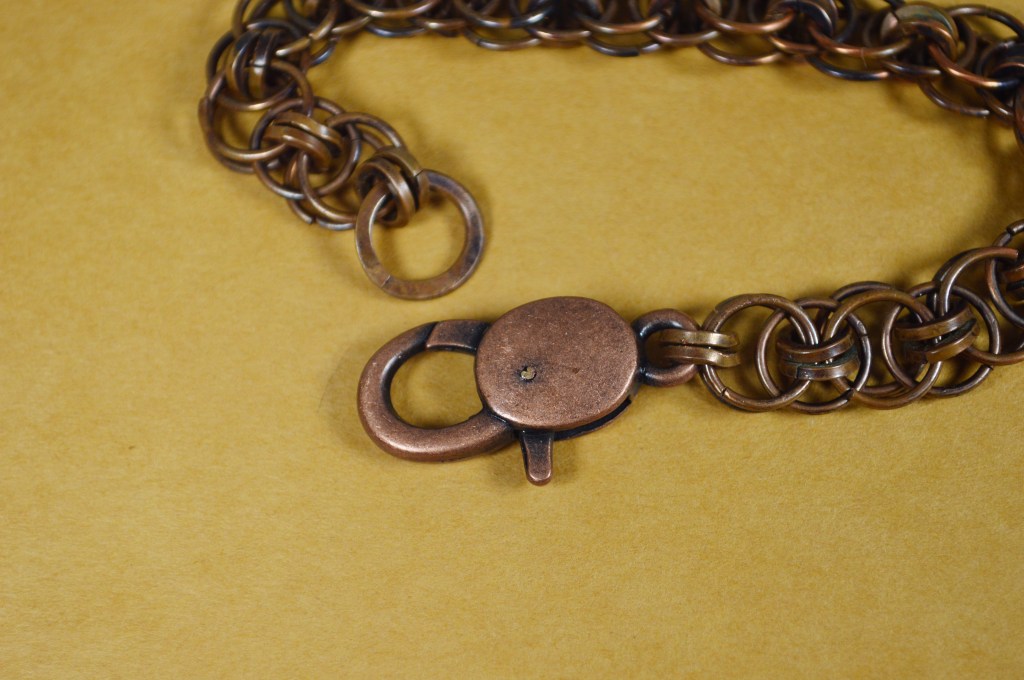
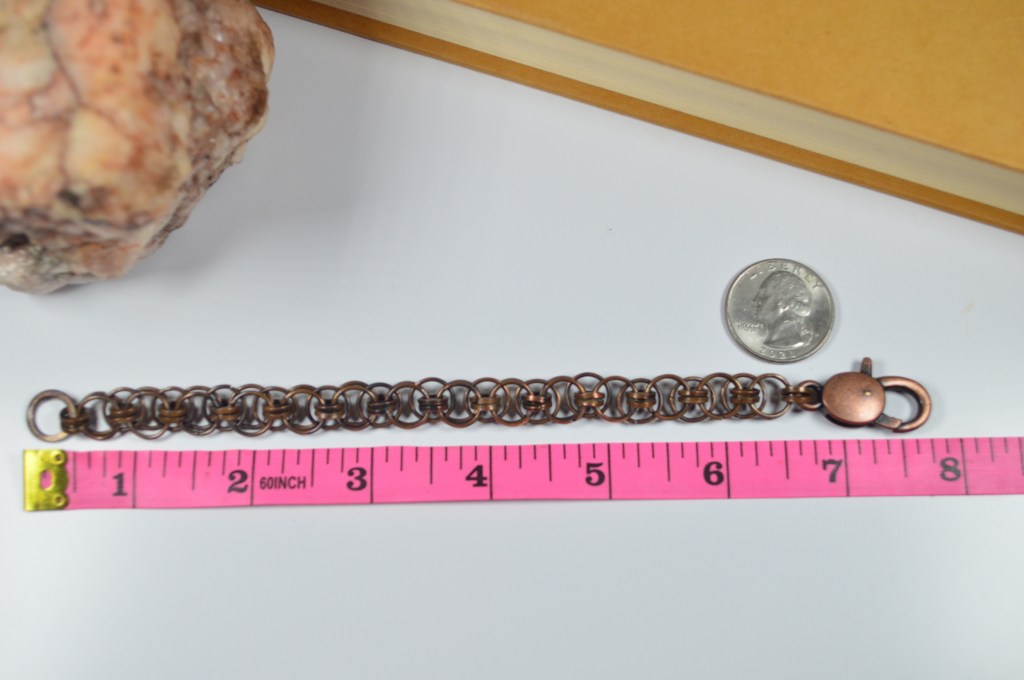
Copper Bracelet in Helm weave

The Copper Helm Weave bracelet is a simple yet elegant design based on the helm chain maille pattern. It is made of 71 rings and measures 7 3/4 inches in total length, including the lobster claw clasp. Although the bracelet appears heavy, it is lightweight.

The copper used is natural and was antiqued using boiled eggs, which gives it a unique patina effect. If you want to learn how to create such effects on your jewelry pieces, check out the blog post “Getting a Natural Patina in Sterling Silver”. Antiquing also adds depth to the piece and especially with chainmaille, it brings out the interesting pattern.

The larger lobster claw clasp not only adds character but is also practical, making it easier to handle when putting the bracelet on without assistance. If you’re interested, you can purchase this beautiful bracelet for $18.50 from the Kaleido Etsy Store. Click this link to view it: https://www.etsy.com/listing/1710239721/helm-weave-chain-bracelet-in-copper.

The Story of the Cross Key

I used to own a key chain that was a particular favorite. It was the shape of a Celtic Cross and stamped into the metal were the words of the first verse of psalm 23, otherwise known as The Shepherd’s prayer.

The Psalm is beautiful, and it was a continual reminder for me; however, this was a favorite keychain for practical reasons as well as spiritual ones. One, its shape. While feeling through my purse I could easily find my keys without ever having to look for them. I would feel for the cross and voila, there it was! Second, its size. The cross was just a little larger than my car key. One note here, this was back in 2005 so, I still had a car that had to be opened with a key! No automatic buttons to press, it was all manual. Because of the size of the cross I never had a problem pulling it from its burial at the bottom of my purse. Third, the key ring that was attached to the cross was a good, medium size that easily fit many keys.

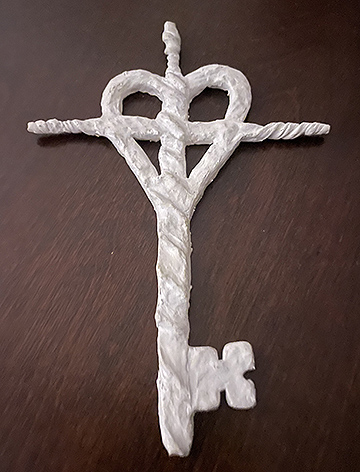
All in all, there were a few characteristics of my Celtic Cross key chain to make it highly favored. I also had several incidents where I would accidentally try to put the cross in my car door’s lock. It had a similar feel as my car key. Times when I would be looking around or not looking directly at the lock, I would inadvertently try to stick the cross in the lock and not my car key. That is what eventually grabbed my attention and gave me an idea for a cross design. From those inadvertent mistakes, I drew a sketch and started making cross key designs in different mediums. I started with polymer clay.

As I learned more about soldering metals and wire wrapping, I started applying the design to metals. I even took antique keys and made a few cross keys from them. This design has been gradually growing since the initial idea came to my mind in 2005. Now I am creating pendants in copper and silver. My goal is to eventually make bracelets and earrings.

The Cross Key has another important facet to its design, its underlying symbolic significance. The cross was originally a pagan symbol; however, after the death of Christ, it became a highly significant symbol of Christianity as it recalled the crucifixion of Jesus Christ. There are a few basic types of crosses that have evolved throughout the history of Christianity. The Crux immissa, or Latin cross, is the basis of my Cross Key design.

The cross is the key to the knowledge of the kingdom of heaven that Jesus Christ spoke of during his ministry on earth. To be a disciple of Christ is to take up one’s cross and follow him which he said in Matthew 16:24, “Then Jesus told his disciples, ‘If any want to become my followers, let them deny themselves and take up their cross and follow me.” (NRSV) This is a call to self-sacrifice. Dying to oneself is a complete surrender to God.

Patina

Patina is what is revealed during an oxidation process. It can occur on many elements such as metal, stone, wood, and even leather. In many instances, it is an aesthetic effect that gives a sense of character to an object. For example, in antique and vintage objects the patina can accentuate the age that is appreciative of its history.

Patina is it a type of tarnish that occurs on copper based metals. Brass tarnishes because of its copper-alloy element. Tarnish occurs during exposure to oxygen and sulfides. Patina and tarnish are both examples of corrosion on metals.

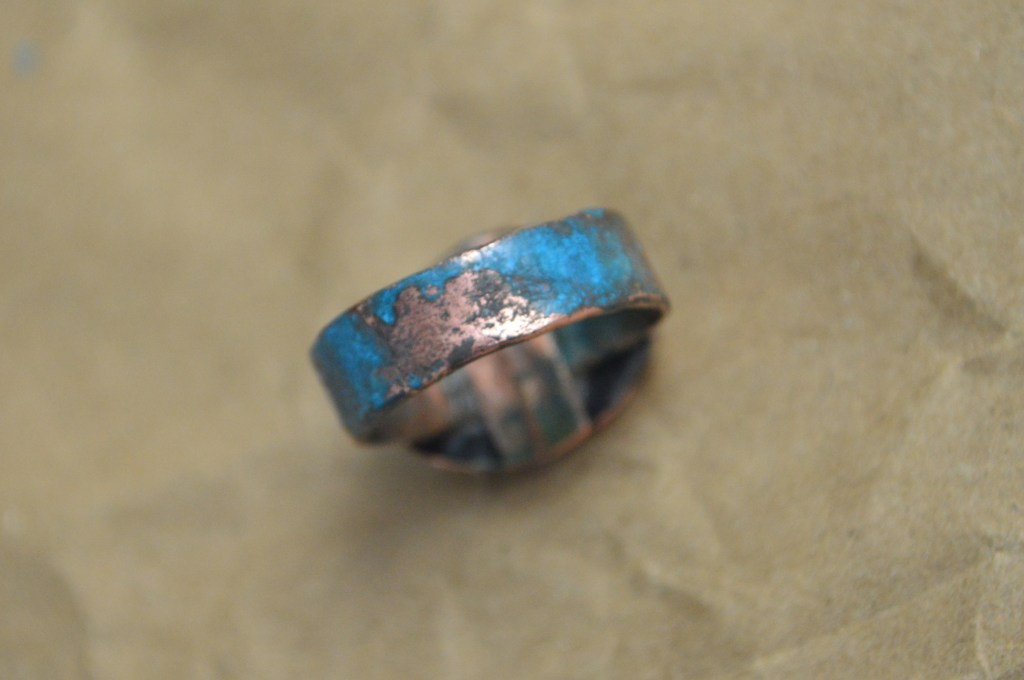
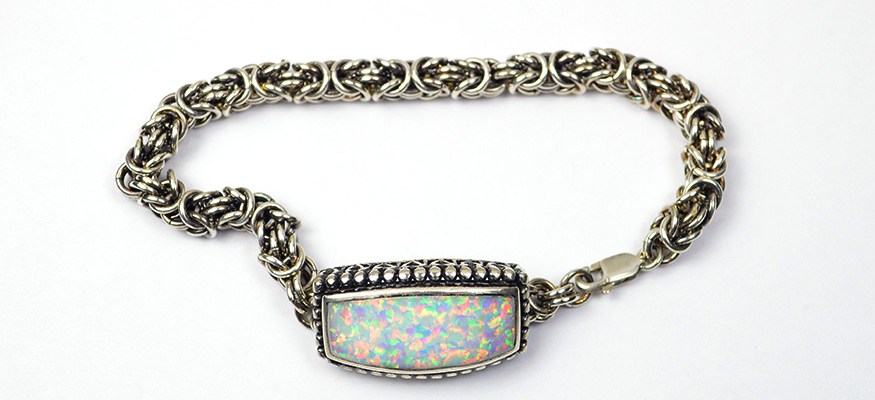
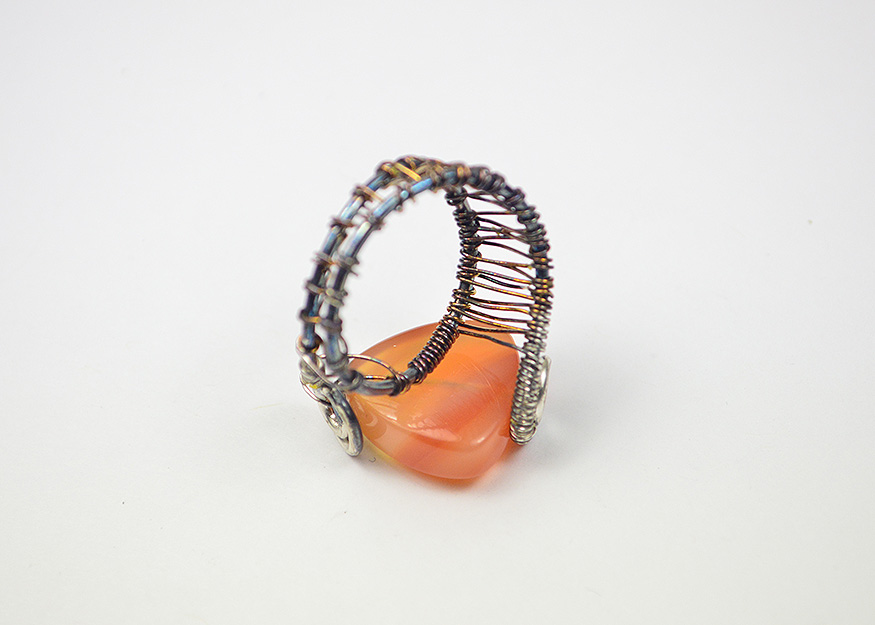
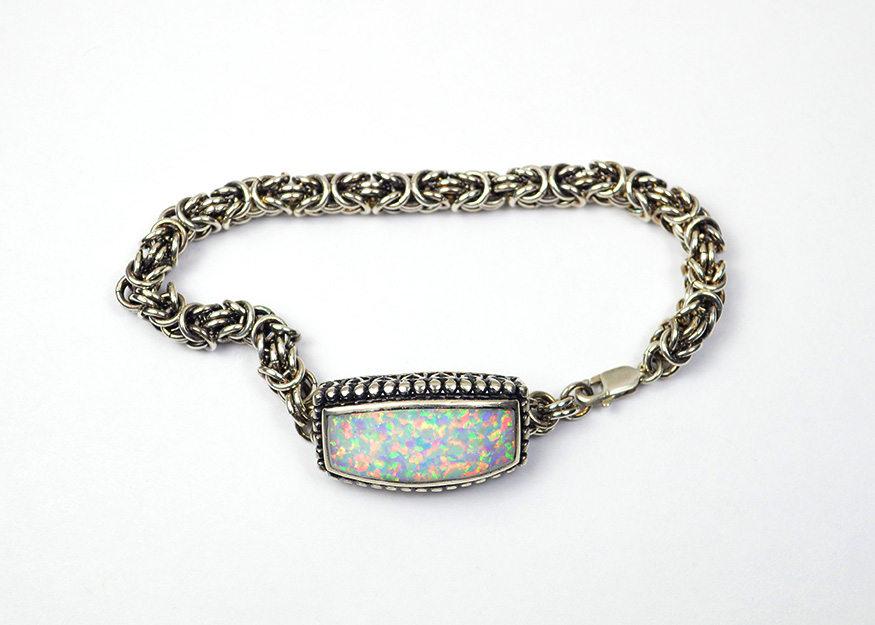
The patina effect on this copper ring was created using ammonia and salt. Another way of achieving a patina effect is using liver of sulfur. Based on the metal, every oxidation process produces a unique effect. In jewelry, this effect is appreciated in multiple ways. The bracelet, pictured below, was oxidized using boiled eggs. Because of the red tones of the copper, the tarnish has a warmer effect than it does with silver.

Most oxidation processes, especially when used on ornate items, give depth to any design. The artistic effect pulls out the detail in some of the most intricate patterns. For the wire and stone designs in the Kaleido store, the oxidation is the best final touch because it embellishes, with natural shadows, the beauty of lines and shapes that would otherwise not be as noticeable.

Copper Quintessence

Copper makes the beautiful and much admired Rose Gold. Copper is usually considered the lower rank among the top three metals. Gold, silver and then…copper.

A few historical details about copper:
• it is prehistoric – this means it existed before written records
• copper gets its name from Old English, ‘coper’ which was born out of the Latin, ‘Cyprium aes’ which means a metal from Cyprus1
• on the Periodic Table, the copper symbol is Cu, atomic number 29
• humans have been working with copper for more than 8,000 years2

Much in the way that Rose Gold is a percentage of yellow gold, silver and copper there are many items including, the copper penny, that are now copper alloys. Copper is a very malleable metal and can be made into a stronger metal by mixing with tin, zinc and other metals to create an alloy. Copper is a highly used electrical conductive because it is ductile and thermal resistant.

Not only is copper useful in instruments for everyday use but it has tremendous health benefits. Do you take a multi-vitamin? Check the label for ingredients. Copper gluconate is in most common daily multi-vitamin supplements. According to “Medical News Today,” copper benefits cardiovascular health, neuron signaling, immune function, osteoporosis, collagen production, arthritis and antioxidant action.3 Of course all of this is good when taken in moderation. Excessive cumulation of copper in the blood stream can reap copper toxicity. This is rare but, it can cause liver damage among other side effects.

Why does copper irritate the skin on some people and not on others? Great question!
First, copper salt can be a natural irritant to the skin. When we sweat we create a reaction with the copper salt and our skin. Also, skin may turn green when wearing natural copper and this is a normal reaction to sweat. It is not harmful but if your skin starts to itch and develops a rash then discontinue wearing the copper. Many people have different reactions to different metals and much of this has to do with what is going on inside your body and the added mineral next to the pores of your skin. There are some who can’t wear sterling silver either.

In the book, “Copper and the Skin,” it states that much of the research that has been done on the impact of wearing copper and its “efficacy of dermal assimilation of copper in arthritic and rheumatoid conditions by skin contact … have been few, poorly conducted … and mostly subjective evidence of benefits to be expected by mere skin contact with the metal.”4 It also goes on to examine that the process of the salts in copper and how those salts interact with the “micro-enviroment” (eg. sweat from the skins pores) are unpredictable. In other words, everyone is different in how their skin will react to different metals. Your best bet is to try some and see what happens. You won’t die from it but, your skin may become itchy and swell a bit. Then you will know you can’t wear pure, natural copper.

Copper quintessence is warm with the color of a radiant sunset.

Copper adds depth when adjoined with silver, gold/brass. It is a versatile substance from the earth given to us. See the link below from the Britannica website that delves into some ancient ruins. This brings a deeper perspective to a common mineral element.

https://www.britannica.com/video/186016/Researchers-pre-Columbian-copper-work-Illinois-Cahokia-Mounds

Kaleido Wire and Stone, basically, me, myself and I, is going on a journey with copper in creating designs of chain maille and wired stone. Some of the designs will be bare copper which means there is no seal or clear coat enamel protectant. In many cases, I use a polymer-based resin seal instead of enamel which will be stated in the listing of the item.

Tidbit for hobbyists/crafters: There is a lot of copper wire sold in art and hobby stores that is already sealed and this is good wire to work with if you have questionable allergies but, you also have to be careful to understand that when working the wire, any nicks, cuts or abrasions will penetrate the protective layer of clear coat seal.

1 “Copper – Element Information, Properties and Uses: Periodic Table.” Copper – Element information, properties and uses | Periodic Table. Accessed May 7, 2020. https://www.rsc.org/periodic-table/element/29/copper.

2 Pappas, Stephanie. “Facts About Copper.” LiveScience. Purch, September 12, 2018. https://www.livescience.com/29377-copper.html.

3 “Copper: Health Benefits, Recommended Intake, Sources, and Risks.” Medical News Today. MediLexicon International. Accessed May 15, 2020. https://www.medicalnewstoday.com/articles/288165#nervous_system.

4 Maibach, Howard I.., Hostynek, Jurij J.. Copper and the Skin. United Kingdom: CRC Press, 2006.

Getting a Natural Patina in Sterling Silver

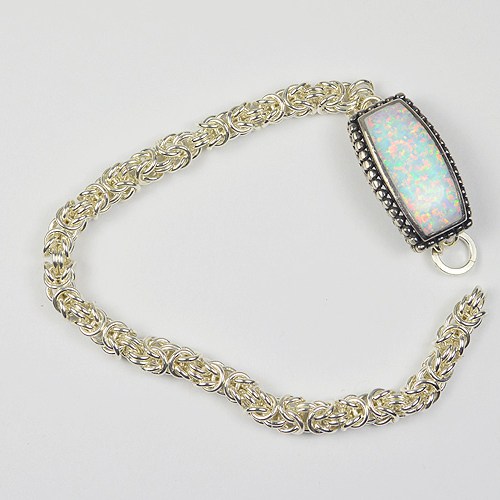
Recently, someone had asked me to take necklace focal piece and turn it into a bracelet. This project led me to do a Byzantine chain maille bracelet and it also led to me antiquing that bracelet to show off the interesting detail of the Byzantine pattern. This project turned out so well I decided to create this blog piece to share how you can get a natural patina in your sterling silver with the simple boiling of eggs. This avoids chemicals and patina agents that can sometimes be a mess.

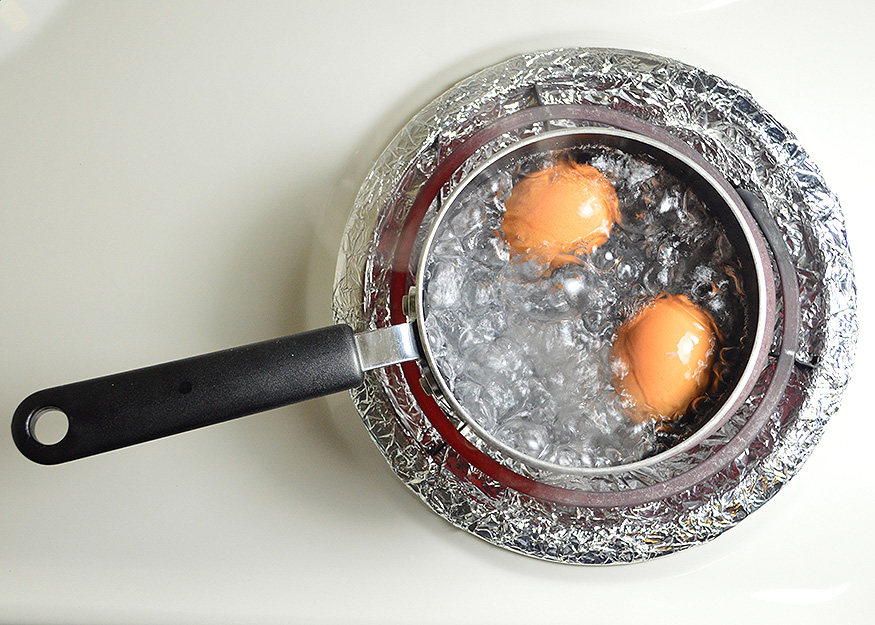
First, get a couple of eggs and start to hard boil them. It does not matter what kind of eggs, any eggs will do.
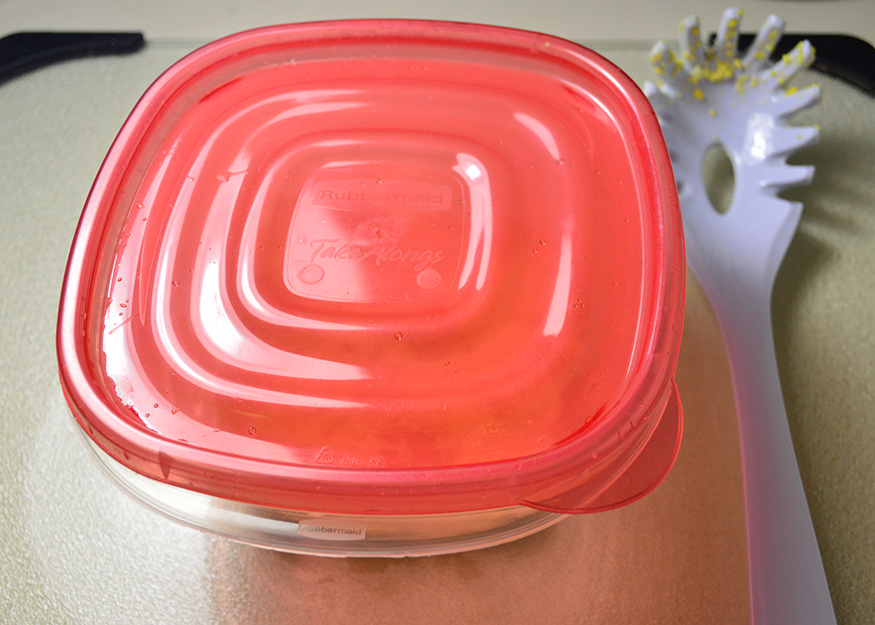
Once the eggs are hard boiled, approximately 7 minutes, then you can place them into a plastic container.

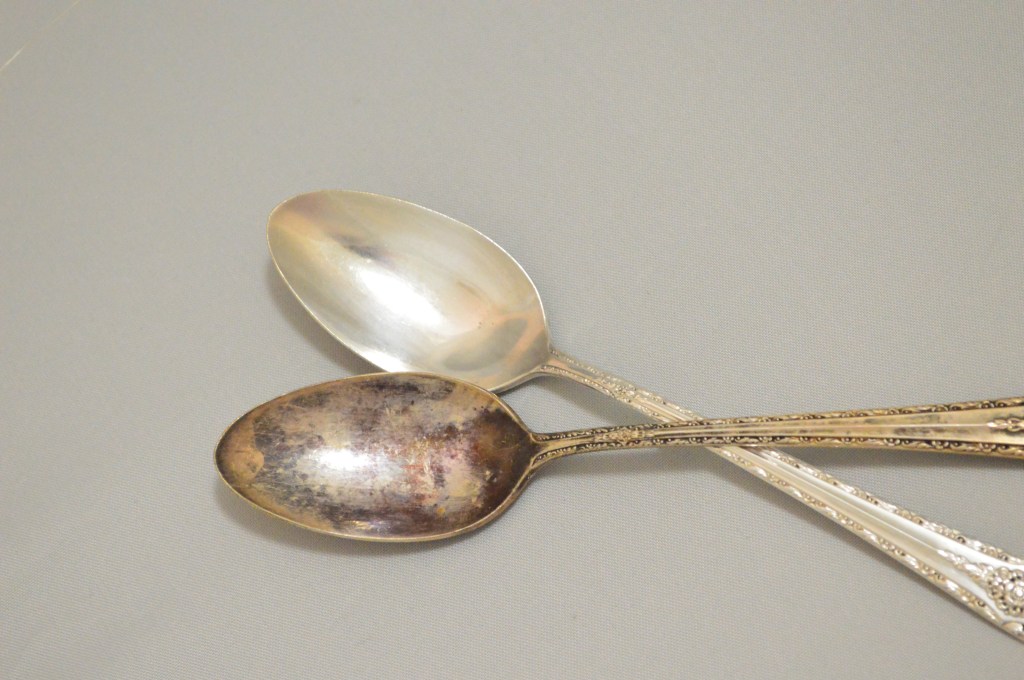
Now you are ready to smash them! Using a spoon, ladle or anything that can easily mash up the eggs, shell and all, within the container.

Quickly, while the eggs are still hot, place the metal you wish to patina inside the container with the egg and close the lid.

Let this sit for a good 15 to 20 minutes. For larger pieces, 30 minutes. It is important for the egg yolk to be hot and steamy. Why does egg yolk tarnish silver? I am so glad you asked! 🙂 Because the yolk emits a sulfur-containing gas called hydrogen sulfide (H2S). Silver naturally tarnishes in reaction to any sulfur gases in the air. This also occurs with copper so, you could easily do this same process with copper.

Next you can use a polishing cloth over the surface of the piece and achieve an appearance that serves to give the metal more depth. As you can see the difference in the chain before and after antiquing. With this method of tarnishing, you can achieve a natural patina look with your silver or copper pieces.

Bloodstone

bloodstone_rough_material

Bloodstone or Heliotrope is a variety of Chalcedony. Chalcedony is a microcrystalline quartz. From the Handbook of Rocks, Minerals and Gemstones by Walter Schumann, Bloodstone is an “Opaque, dark green variety of quartz with red spotty inclusions.” These stones are found predominately in India, Brazil, Madagascar, Namibia and some areas of the USA.

Legend has it that the red spots of the Bloodstone were thought to be Christ’s blood. This stems from the Middle Ages and many things became folklore from those days. According to some metaphysical references, the stone is thought to carry an energy of Christ consciousness.¹

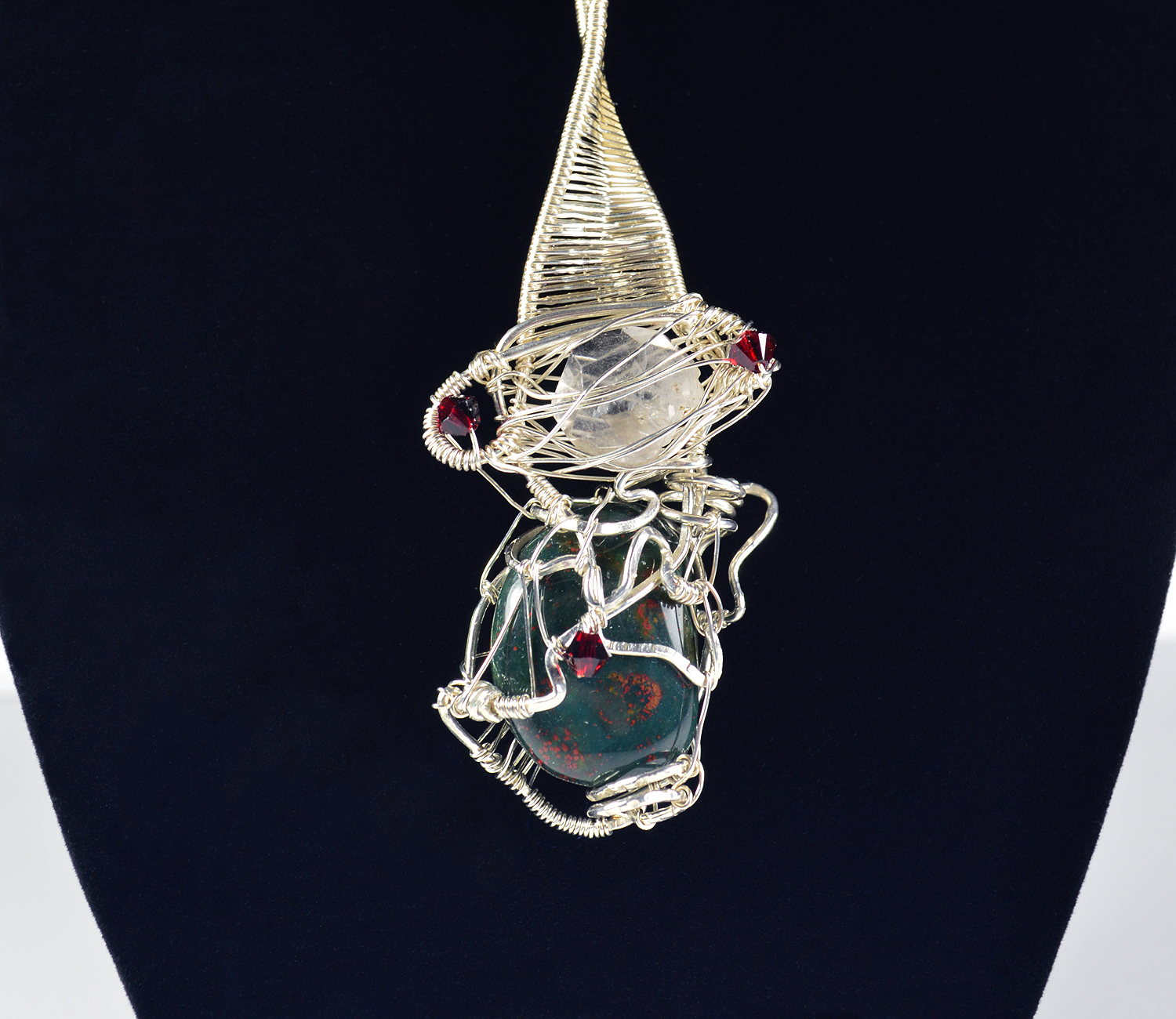
In one of my latest designs, I use a tumble-polished freeform of Bloodstone as the centerpiece, along with Herkimer Quartz and Swarovski crystals. The long, twisted weaved bail is an exciting aspect to the design. It is representative of structure similar to DNA. The necklace is made with beading wire and assorted beads such as, Tiger Eye, Mook Jasper, Bloodstone and Garnet.

bloodstone_pendant_thmb1

Check out the listing in my Etsy store: https://etsy.me/2Bztrlo

1) Simmons, Robert and Ahsian, Naisha, The Book of Stones: Who They Are and What They Teach (Heaven & Earth Publishing LLC, 2005, 2007), 73-74.

The Roller Coaster Weave

Just finished a design that I am very happy about. It is a pattern that I will repeat and I am calling it the Roller Coaster Weave. It is my new template for bead rings. I have been wearing this ring today and I am in love with it!

rainforest_japer_ring_thmb1

The wire base is 16 gauge sterling silver, hammered and structured into a circle. The weave wire is argentium sterling silver. Argentium is marked by .935 instead of regular sterling silvers .925 mark. This alloy contains more silver mixed with germanium. Argentium resists tarnish more than the standard sterling silver.

Rainforest Jasper (Rhyolite) is a beautiful and fascinating stone to look at. It is volcanic material formed by the process of heating and cooling in the magma or lava. It contains quartz with a composition very similar to that of granite. It is mined in the United States, Australia, Brazil, Canada, Russia, Mexico, India, Venezuela, Uruguay, Madagascar, Egypt and other parts of the world. Every area has its own version and appearance that makes it unique to that particular place.

For those who follow the metaphysical practices, Rainforest Jasper connects one with the earth and is helpful in connecting with nature and emotional healing. Its energy is known to invigorate and add to one’s positive attitude in the enjoyment of life.

Check out the listing in my Etsy store: https://etsy.me/2RcFOu9

Polishing Wire Wrap

DSCF0589_front
Wire Wrap Pendant

So now you have this beautiful piece of wire wrapped jewelry. It is a treasure and something special you want to preserve and take care of. I receive many questions from people about how to care for the stones and the wire. Wire wrapped jewelry is not something you want to soak in commercial cleaning solutions. Sometimes, a mild soap mixed with water will do the trick.

I usually list in the description of my pieces as to whether or not I have sealed the wire with a clear varnish or clear resin to prevent tarnishing. Even with sealing, metals will begin to show the signs of exposure to the elements of air, sun, sweat and all those other things you don’t necessarily think about like, hairspray or perfumes and colognes. These do have an effect on all metals including, gold.

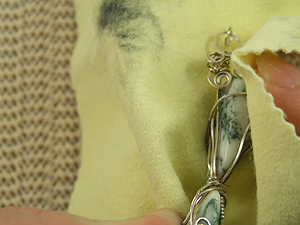
When you do see a bit of tarnish begin to spread on your sterling silver or copper wire, one of the first steps you can take is to polish the metal lightly with a polishing cloth. Most jewelry stores sell these cloths, you just have to ask for them at the counter.

DSCF0595_cloth
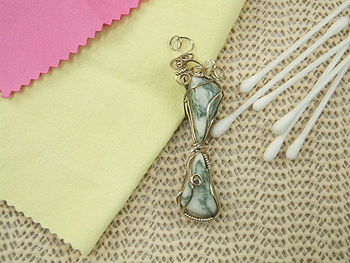
Wire wrapped pendant being polished using a standard polishing cloth.

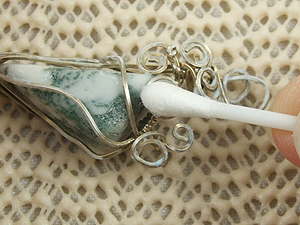
Another step would be a polish that will last longer and protect the metal. There are many products sold for polishing silver, brass and copper metals. These are good polishing products and they put a barrier of protection on the metal so the shine lasts longer. You can use a cotton swab to spread the polish on and buff it off. A rinsing of mild soap and water also does the trick for lesser tarnished areas.

For copper, there are some more natural polishing products you can try such as ketchup and toothpaste. It takes longer with these products but, if you have some time and patience, it can’t hurt!

The best way to preserve any and all jewelry pieces is to keep them in separate containers and sealed. Jewelry boxes are fine but, if you are like me, you know how that goes. I am not the best at keeping things nice and neat and separated in my jewelry box. I am sometimes very bad at quickly throwing my earrings in the box and not thinking anything of it. Well, nicks and scratches occur when we do this so, if you really care about certain pieces, you will want to take the extra time and keep things neat and separated. Little plastic bags are the best for preventing future tarnish.

As far as the stones, you don’t want to put any stones in any harsh chemicals. If you go swimming in the pool, take your jewelry off! The chlorine is bad for metal and stone.

Enjoy that precious piece of history you are wearing and yes, it is a part of history. Metal and stone come from the earth and it has taken some time for both to evolve, grow, metamorphose into the very thing you are wearing.